


The power of mountain herbs
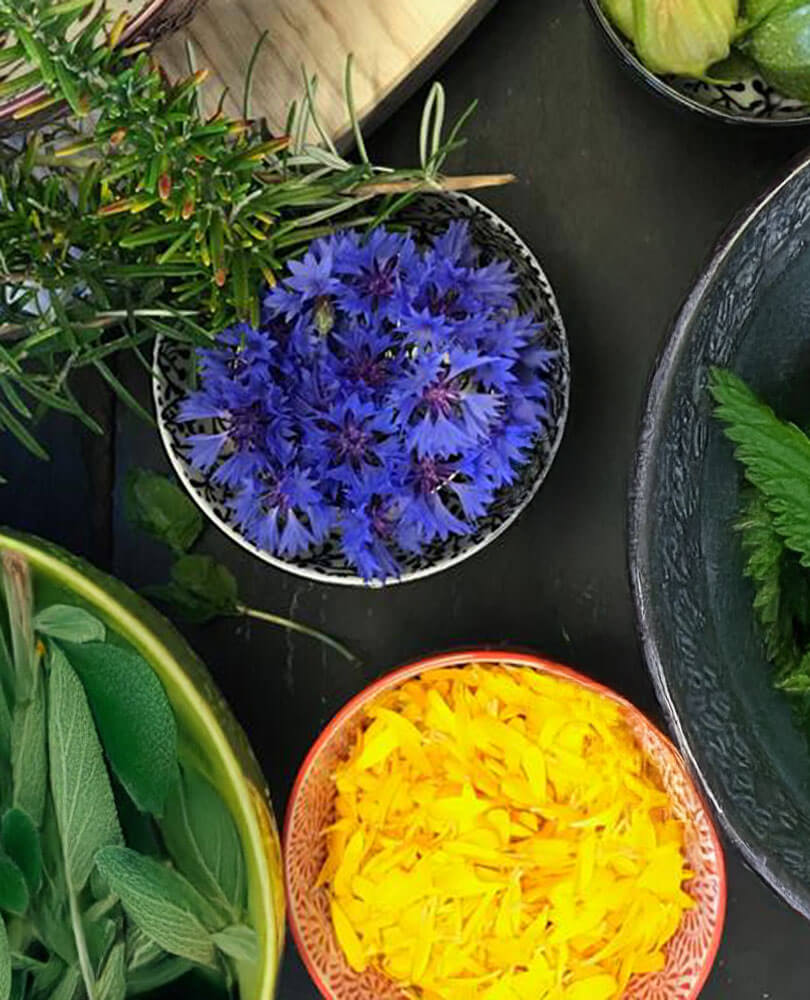
Around 130 plant species grow on healthy South Tyrolean mountain meadows, including many wild herbs that have been used in folk medicine since ancient times.
Stinging nettle – Urtica: The stinging nettle is often wrongly referred to as a weed, but it is a traditional medicinal plant that has been used for medicinal purposes since ancient times. In folk medicine, nettles are recommended for detoxification and purification, as well as for fatigue and exhaustion. They are also a good remedy for iron deficiency. Depending on where they grow, they provide two to four times as much iron as a beef steak and up to three times as much iron as spinach.
„Nettles would have been eradicated long ago if people knew their value.”
Basil – Ocimum basilicum:
Basil is best known to us as a culinary herb. It develops its incomparable aroma especially when combined with tomatoes. But basil is also a medicinal plant. It not only strengthens the digestive organs, but also calms the nerves, relieves migraines and is beneficial in gynaecology.
Ground elder – Aegopodium podagraria:
Most garden owners consider ground elder, also known as three-leaf, to be a troublesome weed that is so stubborn that it is impossible to get rid of. However, ground elder was once highly valued in folk medicine for treating gout and rheumatism.
Horseradish – Armoracia rusticana:
Horseradish is certainly familiar to everyone as a condiment for meat dishes. But few people know that it also has pronounced medicinal properties. The pungent root of horseradish helps against all kinds of infectious diseases and also against pain. Horseradish even combats flu viruses, making it an invaluable addition to any medicine cabinet.
Sage – Salvia officinalis:
Sage is one of the herbs native to the Mediterranean region, but it also thrives here. Planted in the right spot in the garden, it can spread over several square metres. Its speciality is its astringent and disinfectant effect. This makes it effective for sore throats and the plant of choice for all types of throat infections. Sage also has a pronounced antiperspirant effect.

Hotel Magdalenahof
Via Pater-Steinmair 4
I-39030 S. Maddalena in Val Casies
South Tyrol – Italy